Your first Scouting memorabilia search
← Previous · Guide home · Topic index · Download PDF · Next →
After entering a keyword, BSPi displays completed sales in a table. This example shows the results you will learn to interpret.
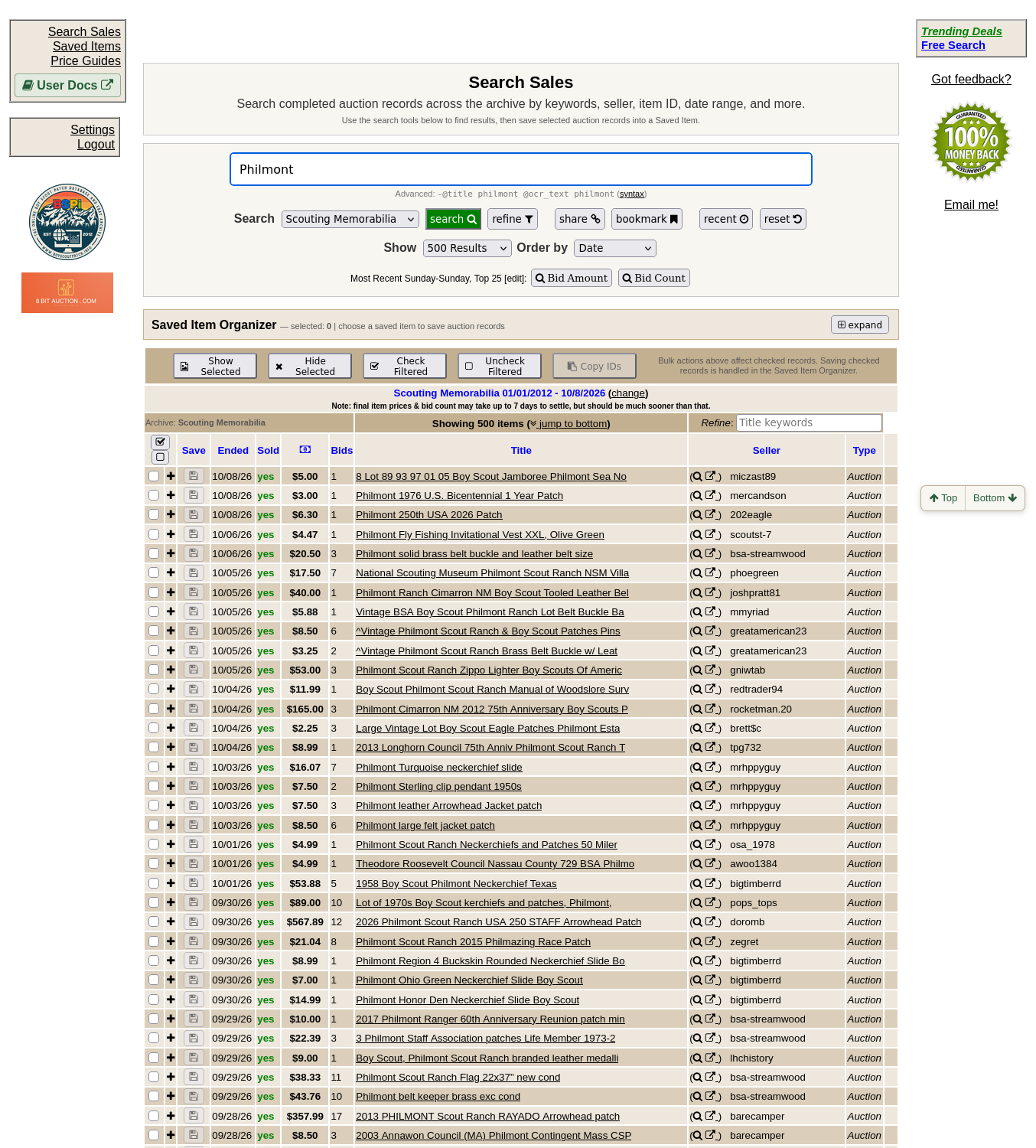
This example search returns historical Scouting sales. Read the title and price of each record, then open likely matches; unrelated lots or collectibles should not be used to value your patch.
Continue below for step-by-step instructions and examples ↓
Found a patch in a box and wondering what it might be worth? Start with what you can read on the item, not a guessed price.
- Sign in. Successful login opens the BSPi search page.
- Start with distinctive words, a lodge number, camp name, council name, or event name that appears on the patch.
- Review candidate historical records for matching design, wording, issue, and condition.
- If there are too many results, refine your terms. If there are none, try fewer words or a different identifying clue.
- Compare several genuinely similar transactions before drawing conclusions about price.
A historical transaction is evidence of what one item sold for at one point in time—not a guaranteed current selling price or formal appraisal.
Understand historical prices or choose a situation-specific guide.
See the Search interface tour for the controls and the results shown after a keyword search.
Example: searching for Philmont memorabilia
In a verified Scouting Memorabilia search, entering Philmont and choosing Search returned a table of historical auction records. The page displayed Ended, Sold, Bids, Title, Seller, and Type, with recorded prices shown in the Sold column for the observed results. The interface reported 500 items in that result view.
The important lesson is that a broad word does not identify one collectible. This search included patches, neckerchiefs, belt buckles, books, and mixed lots. If you are holding a particular Philmont patch, do not average all of those prices. Look for the same issue, design, year, and condition, and exclude unrelated items and lots.
The interface also warns that final prices and bid counts may take up to seven days to settle. Be especially careful with very recent transactions.
Observed October 9, 2026, using one human-paced Scouting search. The records and prices are historical observations, not current price quotations.