I inherited a Scouting collection
← Previous · Guide home · Topic index · Download PDF · Next →
Start with a manageable group of inherited items. The results table illustrates how individual historical sales appear.
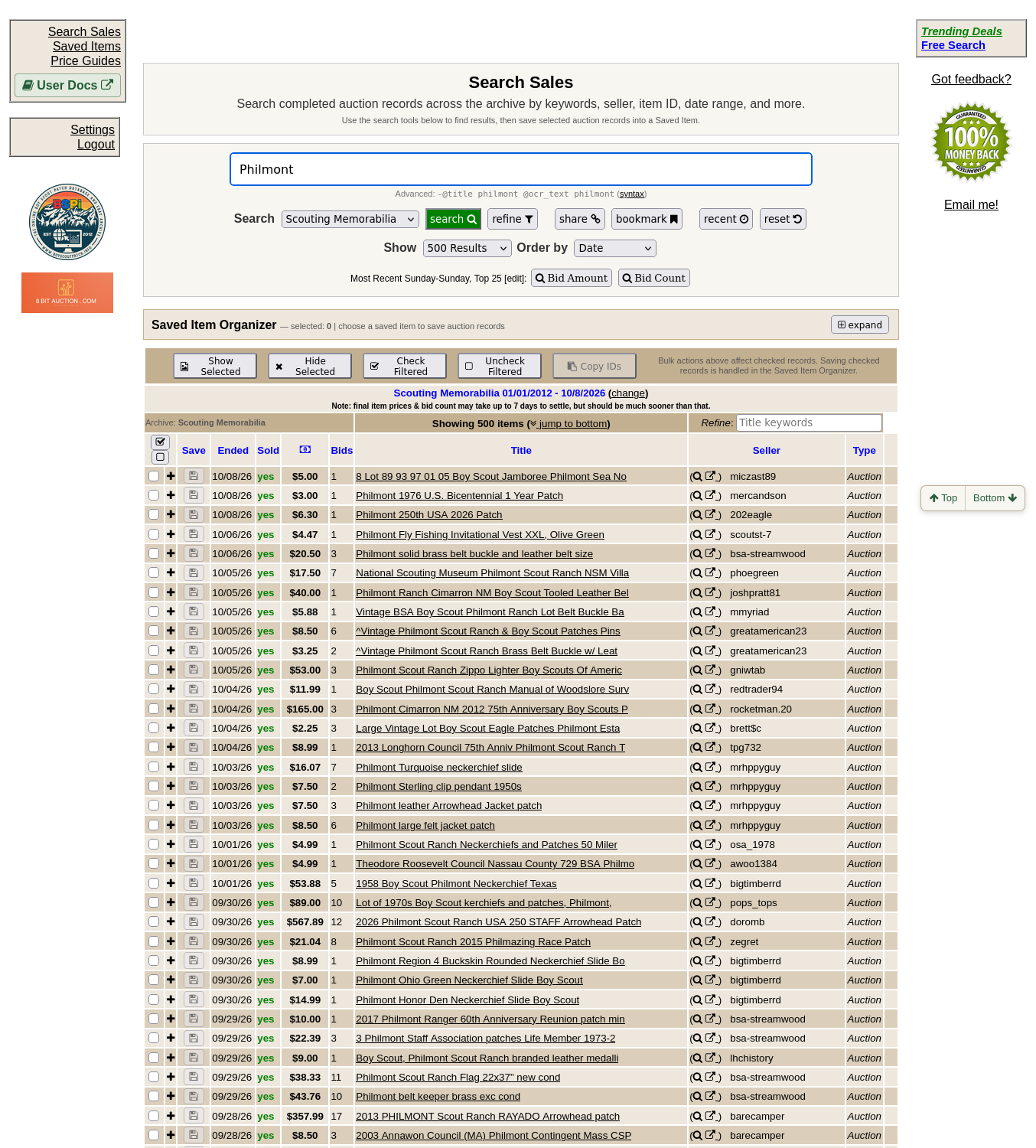
A broad search may return many different kinds of Scouting memorabilia. Sort your inherited items into groups and compare only records that truly resemble each item.
Continue below for step-by-step instructions and examples ↓
You have boxes or albums of patches and want to understand what is there without rushing into a sale.
A practical starting workflow
- Separate obvious groups by council, lodge, camp, or event.
- Photograph items and record visible text before researching them.
- Search a representative item from each group.
- Distinguish common-looking items from those needing further identification.
- Keep notes about the records you consulted and avoid adding up unsupported single-sale prices.
Interpreting the evidence
Use comparable historical sales rather than treating one record as a definitive current valuation. Check item identity, condition, sale date, and whether the record covers a lot or a single item.
For more precise comparisons, consult search fields and filters. OCR may help discover poorly titled records, but OCR matches require visual verification.
Historical sales are evidence for comparison, not a certified appraisal.
A manageable first session
Start with five representative items, not the entire collection. For each, record visible words, numbers, condition, and whether it belongs to a set or group. Search BSPi for one identifying clue, expand the candidate images, and keep the item URL as evidence when you find a close match.
Use Refine to narrow broad searches by date or other relevant attributes. If you know a seller or item ID, see seller and exact-ID searching. Keep separate notes for items with no convincing comparable records. A single large lot sale is not a reliable price for each item inside it.