Searching for overlooked Scouting bargains
← Previous · Guide home · Topic index · Download PDF · Next →
A bargain search starts with carefully chosen filters. This view shows where to narrow a broad result set.
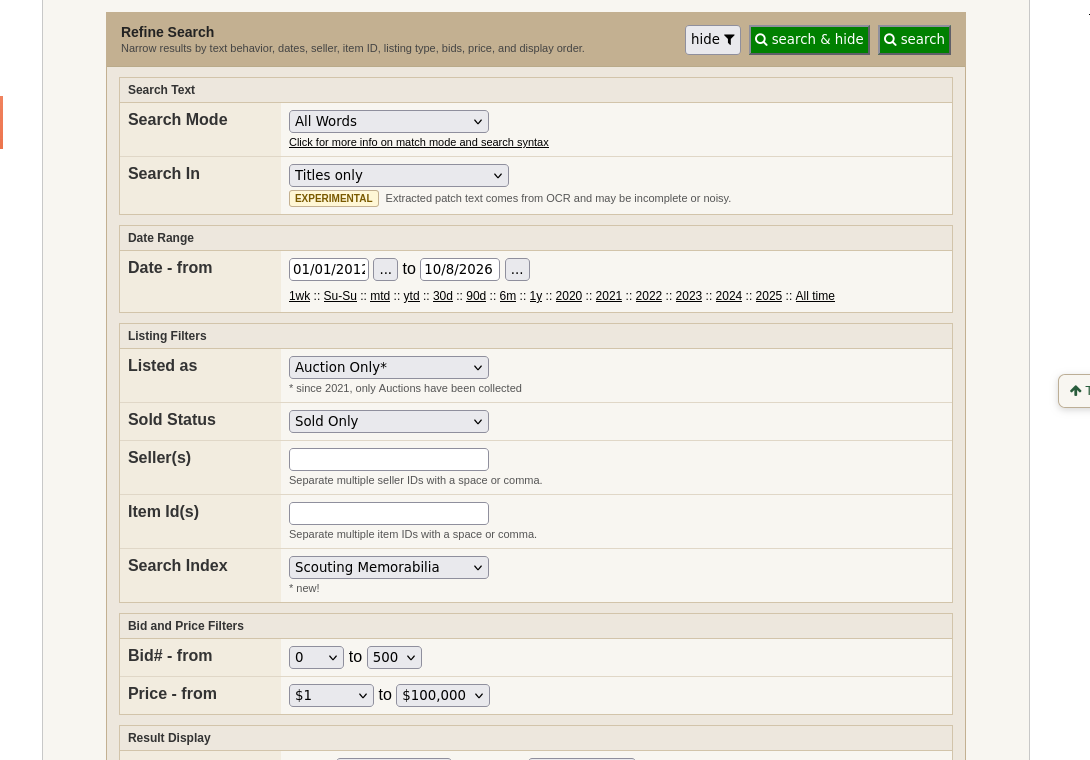
Refine Search lets you look beyond obvious titles. Try image-text search to uncover possible overlooked items, but always check the photograph before deciding you found a bargain.
Continue below for step-by-step instructions and examples ↓
You regularly browse listings and want to recognize opportunities that other buyers may miss.
A practical starting workflow
- Build a list of issue names, lodge numbers, camps, and alternate terminology.
- Use targeted BSPi searches to learn the historical range for those items.
- Investigate listings with vague titles using visible image text and OCR clues where available.
- Verify the actual issue and condition before treating a low price as a bargain.
- Keep track of uncertainty and avoid assuming past highs are normal prices.
Interpreting the evidence
Use comparable historical sales rather than treating one record as a definitive current valuation. Check item identity, condition, sale date, and whether the record covers a lot or a single item.
For more precise comparisons, consult search fields and filters. OCR may help discover poorly titled records, but OCR matches require visual verification.
Historical sales are evidence for comparison, not a certified appraisal.
A repeatable search habit
Use distinctive names, issue numbers, and alternate wording in Search. Try title-only versus OCR-assisted search to discover different candidates. The OCR index is experimental: verify every interesting match against the photograph before deciding that a poorly titled listing is a bargain.
Use the expanded image preview to inspect candidates, and check the individual item record for more photographs and historical context. Avoid making purchase decisions solely from a search result's title or one exceptional past price.