How should I price a Scout collectible?
← Previous · Guide home · Topic index · Download PDF · Next →
Similar Sold Items can provide leads when pricing a listing. The example below also shows why suggestions require verification.
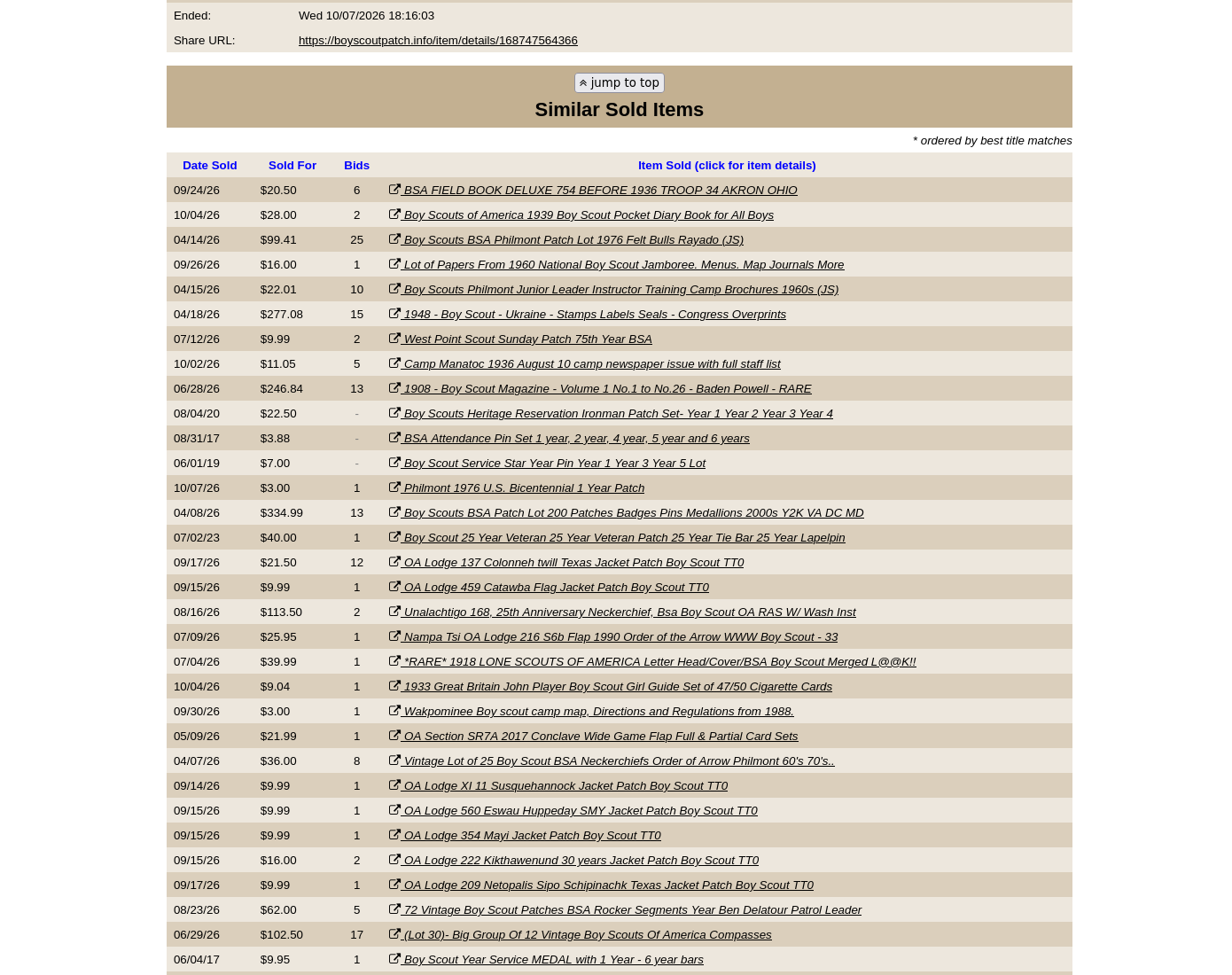
Similar Sold Items are suggestions for further research, not automatic valuations. Open each promising record and reject unrelated items or lots before choosing an asking price.
Continue below for step-by-step instructions and examples ↓
You want to list an item without accidentally underpricing it or asking an unrealistic amount.
A practical starting workflow
- Identify the issue and note its condition honestly.
- Search for recent and older comparable completed sales.
- Separate single-item sales from mixed lots.
- Consider variation in results and the urgency of your sale.
- Set your own asking price using the evidence, accounting for fees and shipping.
Interpreting the evidence
Use comparable historical sales rather than treating one record as a definitive current valuation. Check item identity, condition, sale date, and whether the record covers a lot or a single item.
For more precise comparisons, consult search fields and filters. OCR may help discover poorly titled records, but OCR matches require visual verification.
Historical sales are evidence for comparison, not a certified appraisal.
Preparing a listing price
Use completed-sale research to identify a reasonable range for the exact issue. Compare individual items with individual items; separate mixed lots. If you know a competitor's seller name, the seller search shortcut can help you inspect that seller's historical records, but those records alone do not establish value.
Note the date of the comparisons and allow for differences in condition, shipping, and fees. When the record is thin, a cautious price or an auction strategy may be more appropriate than an unsupported precise estimate.